

Daraz Vs Your Own Website: Where Should You Sell In 2026?
The real trade-offs between selling on Daraz and running your own online store in Pakistan, and why many sellers end up doing both.

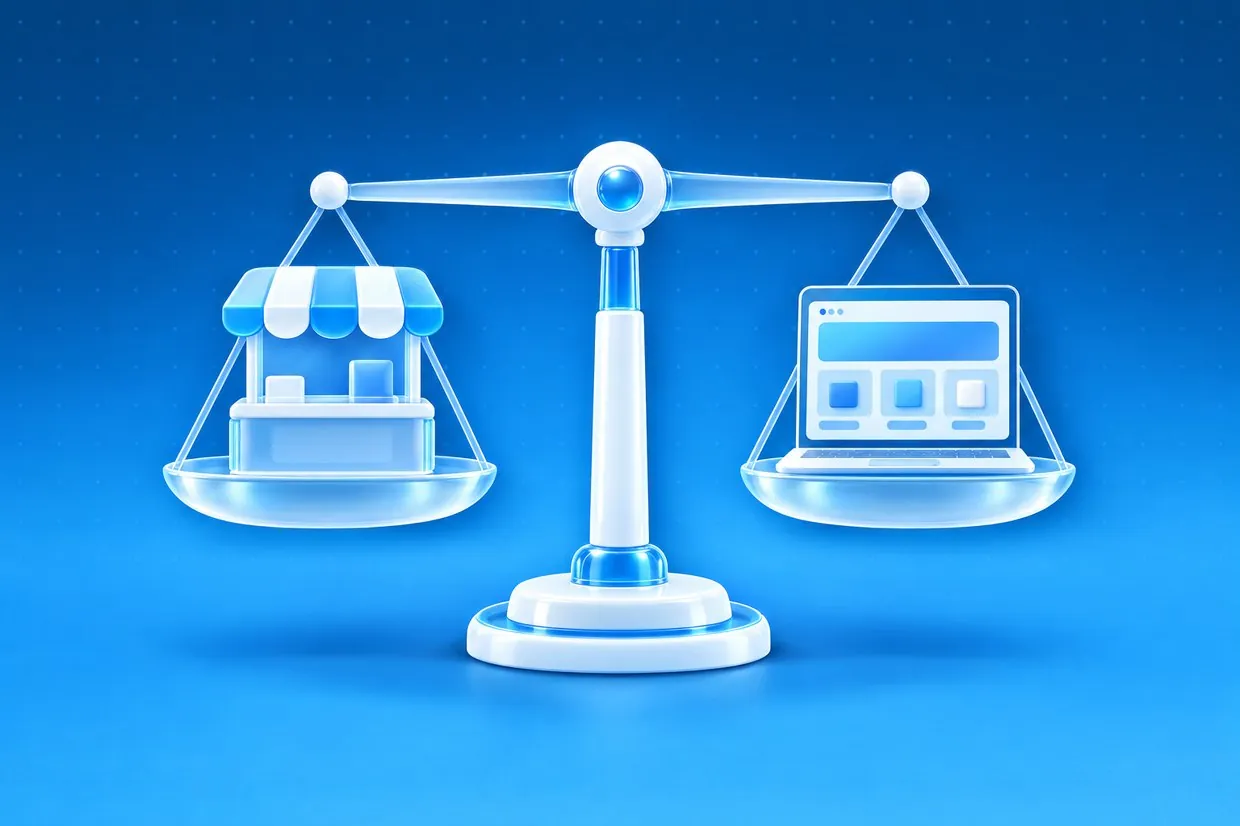
Short answer: Daraz gives you instant access to buyers but you pay commission, compete on price and do not own the customer. Your own website takes more work to bring traffic, but you keep the margin, the brand and the customer list. Most growing Pakistani sellers use Daraz to reach new buyers and their own website to build repeat business.
Side by side
| Daraz | Your own website | |
|---|---|---|
| Traffic | Built in | You bring it (ads, social, SEO) |
| Fees | Commission and fees per sale | Setup cost, hosting, payment fees |
| Pricing | Side by side with competitors | Your price, your bundles |
| Customer data | Stays with the marketplace | Yours, for email and WhatsApp |
| Brand | Your shop inside Daraz | Your brand, your design |
| Rules | Marketplace policies apply | Your own policies |
When Daraz makes sense
- You are testing products and want sales before investing in a store.
- Your products are commodities that buyers search for by name.
- You do not yet have a marketing budget to bring traffic.
When your own website makes sense
- You have a brand, and repeat customers matter more than one-off orders.
- Your margins cannot carry marketplace commission.
- You want to build an email and WhatsApp list you can sell to again.
- You sell bundles, custom orders or B2B that a marketplace handles poorly.
Doing both without the chaos
Keep stock in one place and update both channels from it. Use Daraz for discovery and your own website for repeat customers, within the marketplace's seller rules. Track which products sell where, and stop listing products on Daraz where the commission eats the margin.
What your own store costs
Our ecommerce packages start at $100 for a Starter store with 10 products, payments and order tracking. Use our website cost calculator to see which package fits.
Comparing the real costs
On Daraz you pay per sale through commission and fees, which change by category and over time, so check the current seller fee schedule before you price. On your own website you pay upfront for the store and yearly for hosting, plus payment gateway fees and marketing. A simple way to decide is to work out your margin per order on both, including returns, and see which leaves more after a typical month.
Building your own customer base
Your own store lets you keep customer emails and WhatsApp numbers for repeat orders, loyalty offers and new product launches. If you also sell on Daraz, check its seller policy before including leaflets or messages that point buyers to your website, because marketplaces often restrict directing customers off their platform. Grow your own list through your website, social media and offline customers instead.
Rent the marketplace's customers. Own your own.
Written by the YSoftTek team from our own project work. Read our editorial policy.
More From The Blog
 Ecommerce
 Website Features Checklist (2026)
The features every online store needs in 2026, from product pages and checkout to delivery, payments, marketing and admin tools, as one checklist.Read the post Ecommerce
How To Start An Ecommerce Business In Pakistan In 2026
A step-by-step guide to starting an online store in Pakistan: products, registration, payments, couriers, platform choice and your first marketing.Read the post Ecommerce
Payment Gateways For Ecommerce Websites In Pakistan (2026 Guide)
Which payment options a Pakistani online store should offer in 2026: cash on delivery, JazzCash, EasyPaisa, local card gateways and bank transfer, and how to choose.Read the post
Ready To Build What You Imagine?
You have seen enough template websites. Let's build one that brings in business, month after month.